Understanding Directional Drilling
 Directional drilling, also known as horizontal directional drilling (HDD), is a trenchless method used by MCON Underground to install underground utilities like pipelines and cables with minimal surface disruption. Unlike traditional open-cut methods, HDD allows us to navigate beneath obstacles such as roads, rivers, or buildings. At MCON, we utilize advanced equipment capable of handling projects from 5,000 to 150,000 lbs of pullback, ensuring precision across various scales. This technique is ideal for urban areas or environmentally sensitive sites where excavation would be impractical. Our expertise, honed since 2006, ensures efficient
and reliable installations.
Planning the Project
Meticulous planning is the foundation of every successful directional drilling project at MCON Underground. Before drilling begins, our team conducts a thorough site assessment, analyzing soil conditions, existing utilities, and potential obstacles. We use advanced technologies, including GPS and electromagnetic utility locating equipment, to map the best drilling path. This ensures accuracy and avoids damage to underground infrastructure. Our turnkey solutions cover everything from design to execution, providing clients with a seamless process. Proper planning minimizes environmental impact and keeps projects on schedule.
Drilling the Pilot Hole
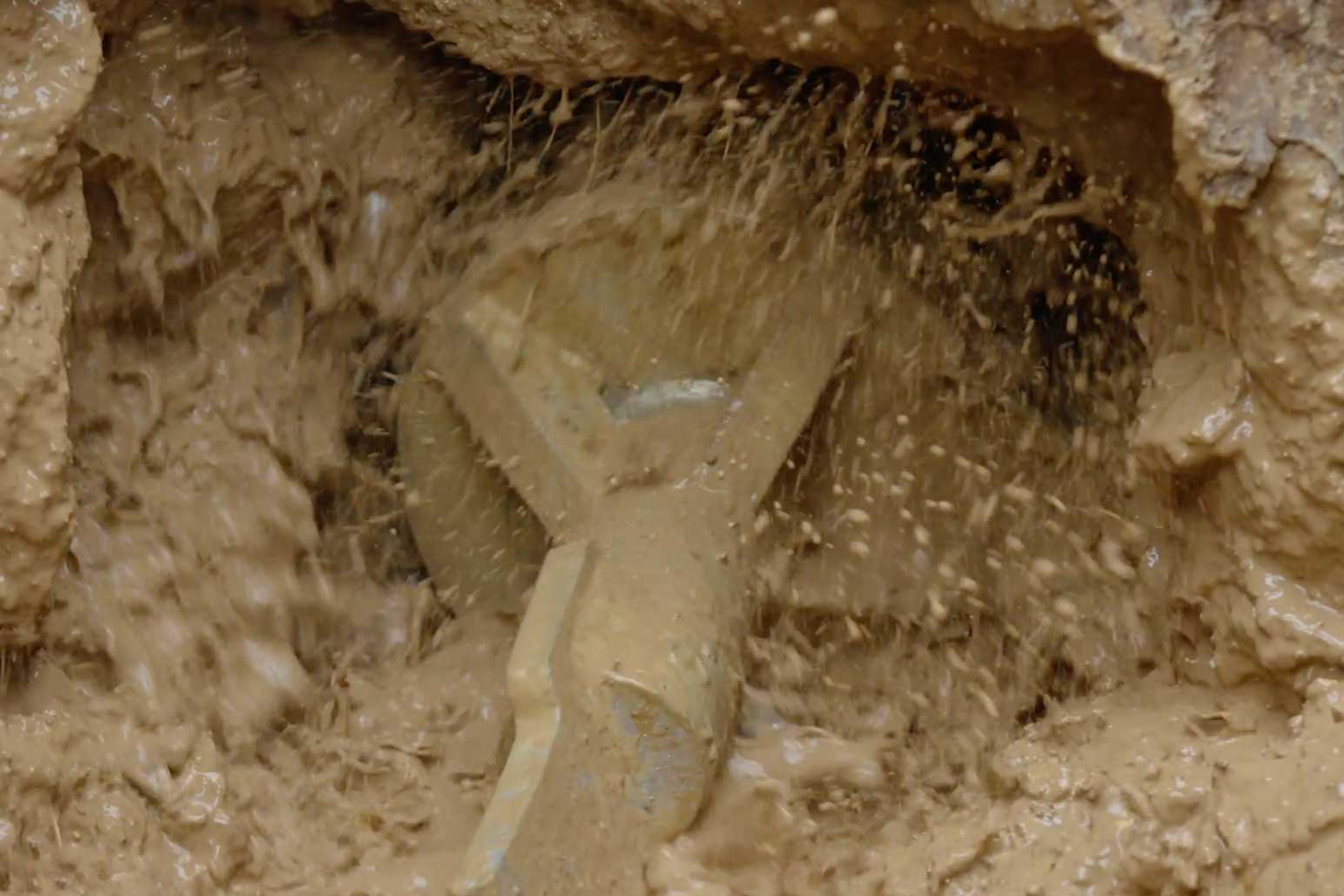
The drilling process starts with creating a pilot hole along a predetermined path. MCON’s state-of-the-art drilling rigs, equipped with steerable bits and tracking beacons, allow operators to guide the drill head with precision. Drilling fluid, a mixture of water and bentonite clay, is pumped to the bit to cool it, stabilize the borehole, and remove cuttings. This fluid ensures the borehole remains clear and supports the drilling process in various soil types. The pilot hole’s accuracy is critical, as it sets the stage for the subsequent steps. Our experienced operators ensure the path avoids obstacles while maintaining efficiency.
Enlarging and Installing
Once the pilot hole is complete, we enlarge it to accommodate the pipeline or cable. A reaming tool is pulled back through the hole, gradually widening it to the required diameter, often 1.5 times the size of the pipeline. After reaming, the prefabricated pipeline, typically made of durable materials like HDPE, is pulled through the borehole. MCON’s equipment ensures a smooth pullback, even for large-diameter projects up to 40 inches. This stage requires precision to maintain borehole stability and avoid surface disruption. Our team’s expertise guarantees a successful installation with minimal environmental impact.
Benefits of HDD
Directional drilling offers significant advantages, making it a preferred method for MCON Underground’s clients. It reduces surface disruption, making it ideal for sensitive areas like golf courses, roadways, or wetlands. HDD is also cost-effective for complex projects, as it eliminates the need for extensive trenching and restoration. Weather has little impact on the process, ensuring consistent progress. Additionally, it minimizes soil disturbance and groundwater contamination risks, aligning with environmental regulations. Trust MCON to deliver precise, efficient, and sustainable solutions for your underground construction needs.