 Operators should learn drilling basics due to the increasing demand for horizontal directional drilling (HDD) outpacing the availability of experienced drillers, forcing contractors to find alternative solutions for workforce training. While on-the-job training remains a common approach, it often falls short due to the high-stress learning environment it creates. To address this, many HDD contractors are turning to equipment dealers for advanced training methods, such as the Vermeer HDD Simulator. This technology provides a realistic and low-stress learning experience, helping operators quickly gain proficiency and confidence before working in the field. Continue reading to learn more about how you can learn the drilling basics.
With horizontal directional drilling in such high demand, there simply aren’t enough experienced drillers available to keep up with the amount of work ahead. To solve this labor challenge, some contractors have promoted laborers from within their ranks, while others have hired novices — and some companies have done both. Whatever solution is selected, contractors are then faced with the issue of training these new operators.
Companies might be tempted to rely on on-the-job HDD training as the primary method to teach operators the intricacies of drilling, enabling them to learn while producing results. However, this approach has its drawbacks. The stress of avoiding mistakes while operating a drill is not an ideal learning environment. For example, new operators might focus more on operating the drill rather than absorbing the information.
This is why more HDD contractors are turning to their equipment dealers for alternative methods to help train their teams. Training options, like simulators, can be tailored to best fit an operation’s needs while getting operators up to speed quickly in a low-stress working environment.
REALISTIC LEARNING EXPERIENCE
A key factor that makes HDD training simulators different from other types of training is that they offer operators the chance to learn in an environment designed to maximize information retention. For that reason, Comer said, Vermeer dealers have significantly invested in the Vermeer HDD Simulator that helps train their customers to operate Vermeer directional drills, all without running a machine in the field.
Like other training programs, the Vermeer HDD Simulator features simulated real-time drilling, bore planning and monitoring of underground conditions — all critical proficiencies on an HDD jobsite. According to Comer, what makes the Vermeer HDD Simulator is the level of realism it brings to the training process. For example, the virtual reality (VR) system provides an immersive, authentic experience with detailed animations that help better prepare the trainee. It also incorporates the Vermeer S3 HDD controls, exactly like those found on the Vermeer drill lineup.
OTHER ADVANTAGES OF SIMULATED TRAINING
According to Comer, the Vermeer HDD Simulator also provides multiple learning levels and tutorials, which serve as a baseline for initial training and offer a path for ongoing education. That’s because simulations allow users to learn how to operate the machine correctly, which prevents wear and tear on the machine.
“New operators often struggle with mastering the necessary series of movements,” said Comer. “But these sequences are repeatable and can be learned without the stress of engine noise and machine operation.”
LEARNING THE BASICS
Comer stated that the learning path on the simulator originates from the fundamentals of HDD. It’s grounded in the information provided in the machine’s operator manual and reflects the curriculum used by Vermeer factory programs and Vermeer dealers for in-person and classroom training.
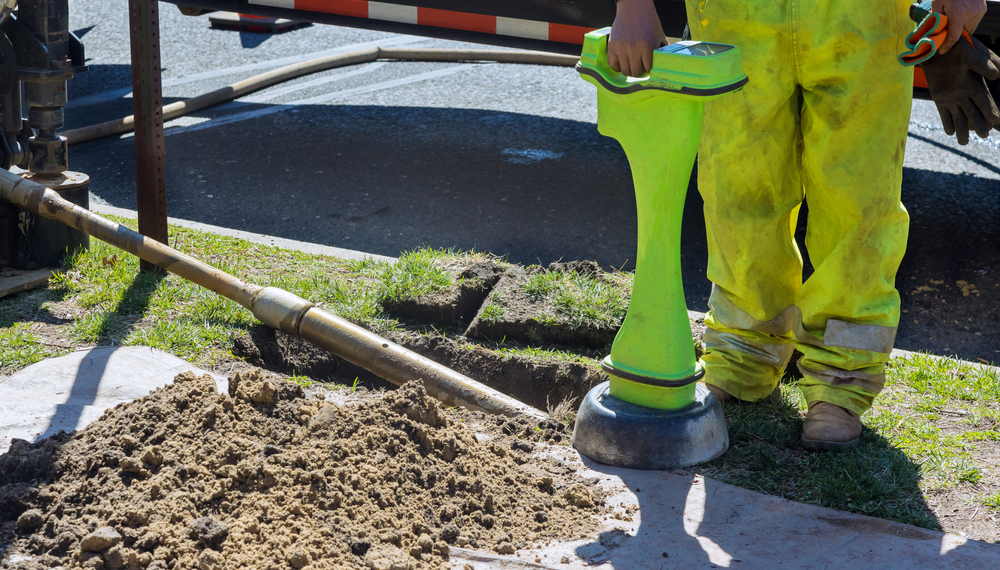
“It starts with the vital need to verify utility locations and the importance of potholing,” Comer said. “Then, it moves on to bore planning and highlights the machine’s crucial safety features. Other topics, such as mix systems, reamer theory and tooling, are addressed separately before operators begin using the machine.”
As Comer mentioned, this training method benefits all experience levels. The simulator is not only used for initial training but also for continuing education. For example, many experienced operators have developed habits over the years, like they don’t grease rods as frequently as they should. The simulator will catch this type of error.
The simulator also assesses whether the individual can operate the machine correctly, thus helping to prevent unnecessary wear and tear on parts. For example, if a less experienced operator under torques a joint, the simulator will catch it and let them know. These types of corrections can maximize the life of machine components, such as sub savers and drill rods.
No matter who the operator is, the simulator grades each action, from handling drill rods to understanding the connection between the display screen and underground steering. Furthermore, it checks if the operator can replace a rod after sending out the first one. If they can’t, they may not be as skilled as they claim. Once an operator has completed a bore, the Vermeer HDD Simulator generates a detailed, rod-by-rod report that provides in-depth feedback and highlights the trainee’s proficiencies in areas of operation, steering accuracy and rod cycle times.
Simulations don’t solve all training challenges. Operators still need to handle variables such as weather conditions and machine noise. Despite these factors, trainees can approach their tasks in the field with more confidence after simulator training.
Click here to continue reading
Original article published on protips.vermeer.com