
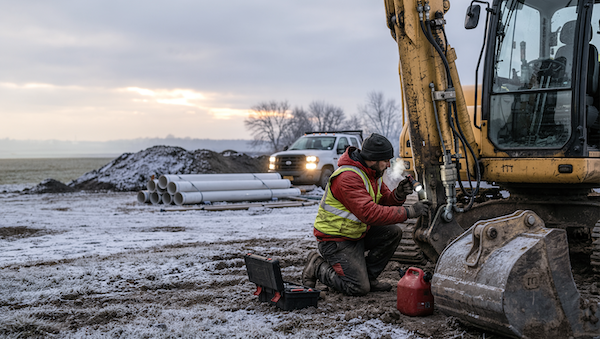
 As winter approaches, taking time to prepare your equipment is crucial for maintaining productivity and preventing costly breakdowns. Cold weather equipment preparation ensures that your machines, hydraulics, batteries, and work trucks can handle harsh temperatures without failure. Neglecting pre-winter maintenance can lead to extended downtime when you can least afford it. This comprehensive guide walks you through the essential steps to get your fleet ready for the cold season. By following this cold weather equipment preparation checklist, you’ll protect your investment and keep operations running smoothly.
Inspect Your Machine Fluids
Machine fluids are among the first systems affected by cold temperatures, and proper inspection is critical. Check your engine oil to ensure it meets the viscosity requirements for cold climates; thicker oils can slow or prevent engine starting in freezing conditions. Examine your coolant levels and concentration to verify they won’t freeze at the temperatures your region experiences during winter. Hydraulic fluid also becomes more sluggish in cold weather, so inspect levels and consider switching to winter-grade hydraulic oil if necessary. Don’t overlook transmission fluid and differential oil, as these require attention in your cold weather equipment preparation routine. Replace any fluids that show signs of contamination or degradation before winter arrives.
Test Your Battery Systems
Batteries lose significant power in cold temperatures, making a thorough battery inspection essential during cold weather equipment preparation. Clean any corrosion from battery terminals and cable connections to ensure maximum electrical conductivity. Check the battery voltage with a multimeter to confirm it meets manufacturer specifications; batteries below optimal charge should be replaced before winter. Examine battery case integrity for cracks or leaks that could allow acid exposure or internal damage. Consider upgrading to a higher-capacity battery if your current one struggles during cold starts. Test your alternator to ensure it’s charging the battery properly and maintaining adequate electrical system performance during cold operations.
Winterize Your Work Trucks
Your work trucks require specialized attention as part of your cold weather equipment preparation routine. Install winter-grade wiper fluid with antifreeze properties to prevent blading and visibility issues during storms. Replace worn wiper blades with winter-specific blades that perform better in ice and snow conditions. Inspect tire tread depth and consider switching to winter tires that provide superior traction on ice and snow compared to all-season tires. Check your heating system to ensure it reaches full temperature quickly and maintains comfortable cabin conditions for operators. Examine your truck’s undercarriage for rust and apply protective coating where needed to prevent corrosion from road salt.
Maintain Hydraulic System Performance
Hydraulic systems are vital to equipment operation, and cold temperatures significantly impact their performance during the cold weather equipment preparation season. Drain and replace hydraulic filters to remove contaminants that could clog lines in cold conditions. Inspect all hydraulic hoses for cracks, leaks, or brittleness that may occur as temperatures drop. Check hydraulic fluid levels and ensure you’re using the correct grade for winter operation, as cold-weather hydraulic fluid has different flow properties than standard grades. Bleed any air from hydraulic lines that could create pressure inconsistencies when fluid viscosity changes. Test hydraulic pressure output to verify systems function at peak efficiency before cold weather arrives.
Schedule Pre-Winter Inspections
A comprehensive pre-winter inspection catches potential problems before they cause operational failures during cold weather equipment preparation. Have a qualified technician examine your equipment’s starting system, including starters and glow plugs for diesel engines. Inspect belts and hoses for wear or damage that could fail under cold stress or increased load. Check air filters to ensure they’re clean and unrestricted, allowing proper airflow for combustion and cooling system operation. Review all safety systems including brakes, lights, and warning indicators to ensure winter visibility and stopping power. Document all inspection findings and complete recommended repairs immediately to prevent cold-related equipment failures.
Preparing Your Fleet for Winter Success
Completing your cold weather equipment preparation checklist before winter arrives protects both your equipment and your bottom line. Proactive maintenance prevents emergency repairs during the busy winter season when downtime is most costly. By addressing hydraulics, batteries, fluids, and truck systems now, you ensure reliable operation through the coldest months ahead. Start your pre-winter preparation today and keep your fleet operating at peak performance all season long.